National Monument Klause Kastel-Staadt
Kastel-Staadt
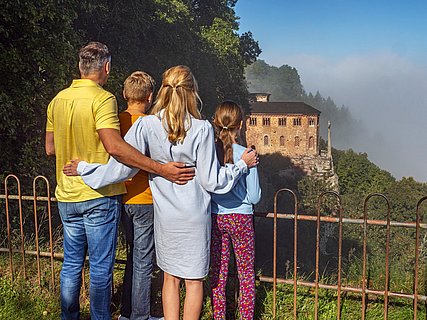
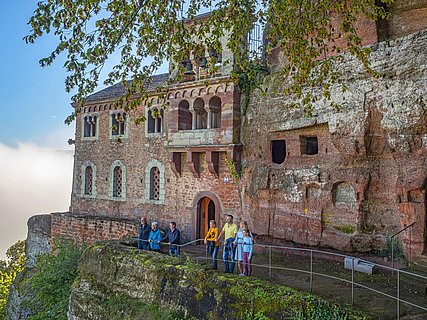
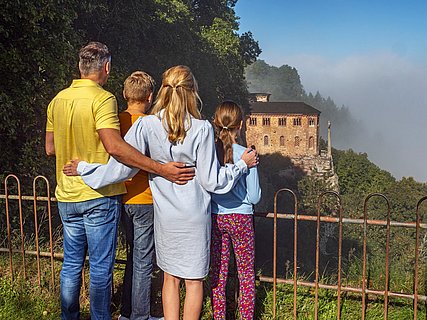
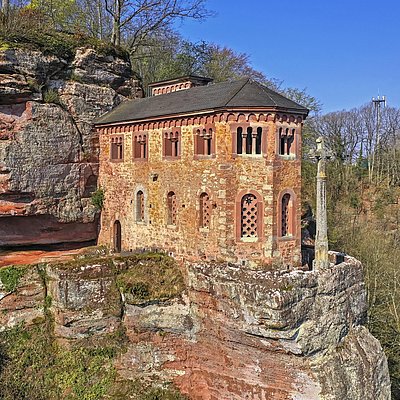
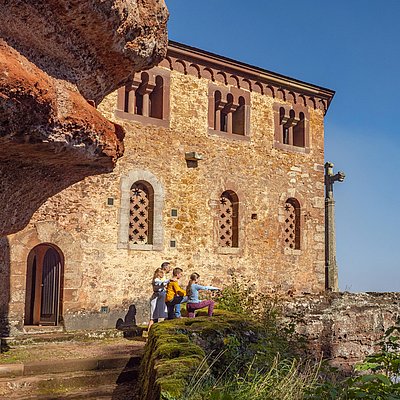
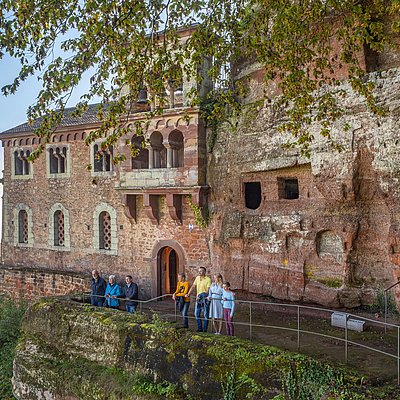
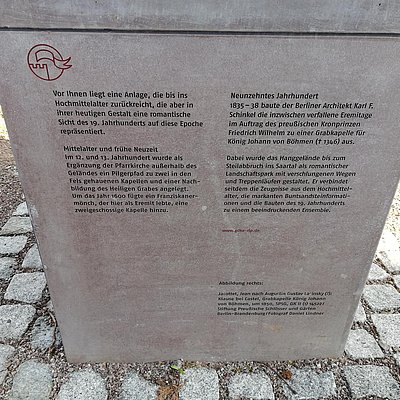
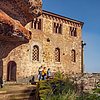
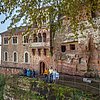
High above the Saar, at the tip of a protruding sandstone cliff, lies the hermitage of Kastel-Staadt with a breathtaking view of the Saar Valley. The origins of the hermitage date back to the 13th century and the Crusades. At that time, two chambers were carved into the sandstone cliff, meant to resemble Golgotha. During the same period, the parish church in Kastel was erected, where pilgrims worshipped Saint Helena, the mother of Emperor Constantine. In the early 17th century, a Franciscan monk built a two-story chapel into the rock. It was the later King Friedrich Wilhelm IV of Prussia who had the long-abandoned ruins converted into a mausoleum for King Johann of Bohemia, who fell in the Battle of Crécy in 1346, after 1833. What motivated him to honor the deceased after almost 500 years? King Johann of Bohemia from the House of Luxembourg fought in the Battle of Crécy despite his blindness. At the forefront, he battled on the side of the French against the English, ultimately finding his heroic death there. The Prussian crown prince revered him as one of his ancestors, embodying chivalric bravery. None other than the famous Prussian architect Karl Friedrich Schinkel designed the plans for the chapel. Schinkel designed the structure in the spirit of southern romanticism with round-arched windows, columned arcades, and a bell gable reminiscent of Italian models. The bones of the Bohemian king rested in the hermitage from 1838 until they were transferred to the cathedral in Luxembourg in 1946. In the chapel space still stands the sarcophagus made of black marble, crafted for the bones of the legendary king. The lid is supported by 4 bronze lions. Additionally, a replica of the Bohemian crown with the imperial orb decorates the burial site. When the sunlight streams in, the star-shaped glazed windows cast a mystical light and play of colors into the otherwise dim chapel. Altogether, the hermitage is seen as a highlight of German romanticism.
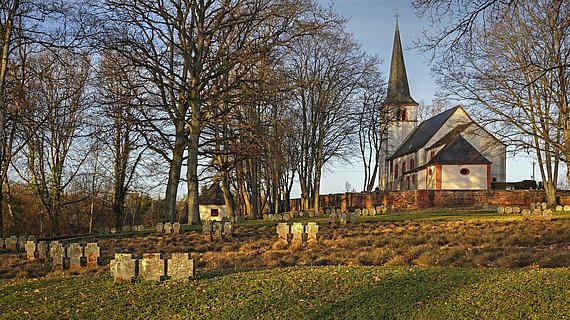
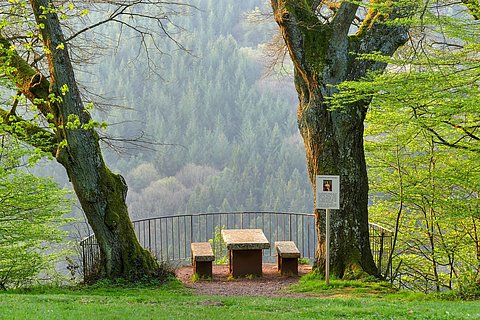
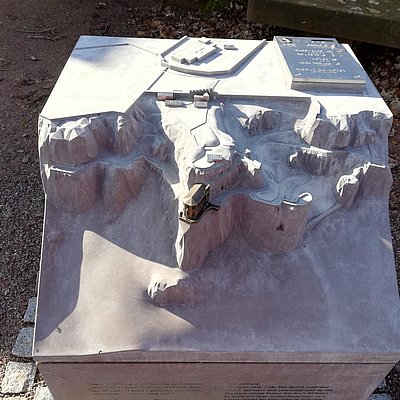
In hardly any other place like Kastel-Staadt can history be experienced so closely. Due to its outstanding historical significance, the plateau has been designated as a monument zone and excavation protection area since 1997. Since the 2nd century B.C., before the Roman founding of Trier, one of the main sites of the Treveri tribe, a so-called oppidum, was located here. Aside from historical treasures from Celtic to Prussian times, the area offers a wealth of scenic attractions. The cultural plateau has much to discover: among others, the hermitage, the honorary cemetery, the Roman theatre, the old village church, and the Elisensitz. A hike along the Kastel rock path with a climbing section on the Altfels or a walk through the archaeological experience trail rounds off the excursion.
Tip: Listening tour "Cultural Plateau Kastel-Staadt"
The listening tour begins at the visitor parking lot in front of the hermitage and lasts about 1 ¼ hours. Great history and magnificent views characterize this walk. You will learn, for example, why the Celts and Romans discovered this place. It will be explained what “soul holes” are and why the sarcophagus in the hermitage chapel is empty today. Enjoy your visit!
And here's how it works:
Download the smartphone app “Listening Tour” from the AppStore or Google Play, then select the listening tour “Cultural Plateau Kastel-Staadt.” At the start, the contents are saved on your smartphone, so no internet connection is necessary while you're on the go.
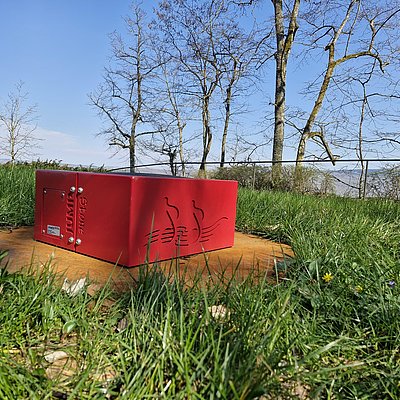
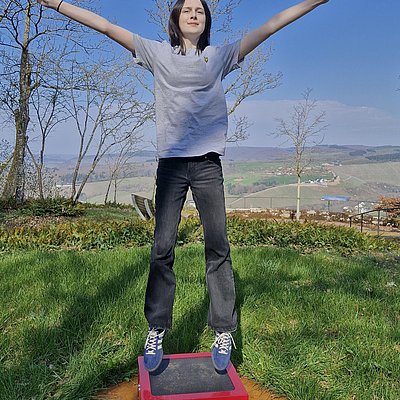
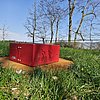
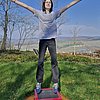
New: Jumpstone Hermitage
The Jumpstone is a special, springy jumping pad that tells the story of the hermitage and the blind King Johann of Bohemia through bouncing!
Information about the Saar-Obermosel holiday region can be found at www.saar-obermosel.de
Downloads
König-Johann-Straße
54441 Kastel-Staadt
0049 6581 995980
info@saar-obermosel.de
http://www.saar-obermosel.de
Business hours
Opening hours 2026:
04.01.-10.31.2026: Wednesday to Sunday 10 a.m. - 4 p.m., July and August 10 a.m. - 5 p.m. Last admission is 30 minutes before closing. Open on public holidays in Rhineland-Palatinate. Please note that, for your own safety, the kiosk may be closed at short notice due to weather conditions.
Admission:
5.00 € adults, 4.00 € students over 16 years, students, trainees, pensioners, unemployed, severely disabled – each with proof, 2.00 € children and teenagers aged 7-16 years, free for children up to 6 years.
Das könnte Sie auch interessieren